Published: 5 November 2026
When silence is ambiguous
A patient may not move, speak or produce a reliable bedside response after severe brain injury. That absence can reflect loss of consciousness, but it can also reflect damage to the systems that turn intention into action. Behavior alone may therefore underestimate preserved cognitive capacity.
A test without visible movement
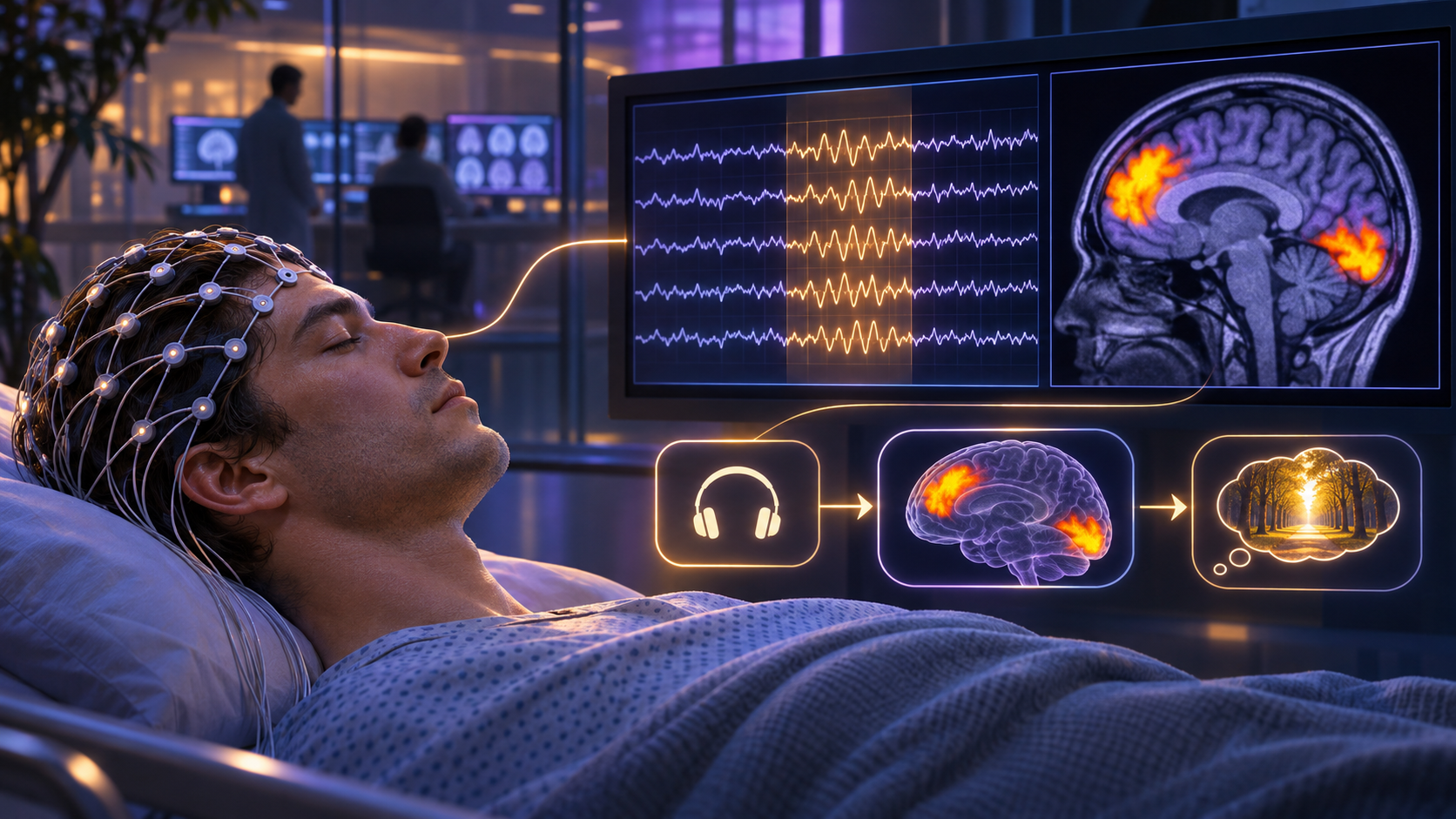
Task-based fMRI and EEG can look for brain responses while a participant imagines an action or follows another mental instruction. The method does not read ordinary thoughts. It tests whether neural activity changes in a pattern associated with sustained command following despite the absence of an observable response.
What the study found
A prospective cohort across six international centers included 353 adults with disorders of consciousness. Among 241 participants who showed no observable command response, 60—about 25 percent—produced a task-related response on fMRI, EEG or both. This phenomenon is called cognitive motor dissociation.
Why a positive result matters
Sustained, instruction-specific activity requires several capacities to work together: hearing or reading a command, retaining it, selecting the requested mental task and repeatedly performing it. A positive result can therefore reveal cognitive organization that a bedside motor examination misses.
Why a negative result is not a verdict
The tests deliberately favor specificity, which can increase false negatives. Fatigue, fluctuating arousal, hearing problems, injury location and imperfect task understanding can all hide a response. Even some participants who visibly followed commands did not show a detectable fMRI or EEG response.
Clinical and ethical boundaries
These findings can inform prognosis, communication research and decisions about care, but they do not establish a universal consciousness meter. Results need specialist interpretation, repeated assessment and integration with clinical evidence. Uncertainty should increase care rather than invite overconfident conclusions.
Discussion question
If brain activity follows a command while the body remains still, what should count as the most important evidence of a person's awareness?
Sources and further reading
New England Journal of Medicine — Cognitive Motor Dissociation in Disorders of Consciousness ↗Share your answer
You must log in to reply.
Sign Up / Log InEstablished evidence, active research and philosophical interpretation are clearly separated.