Published: 19 October 2026
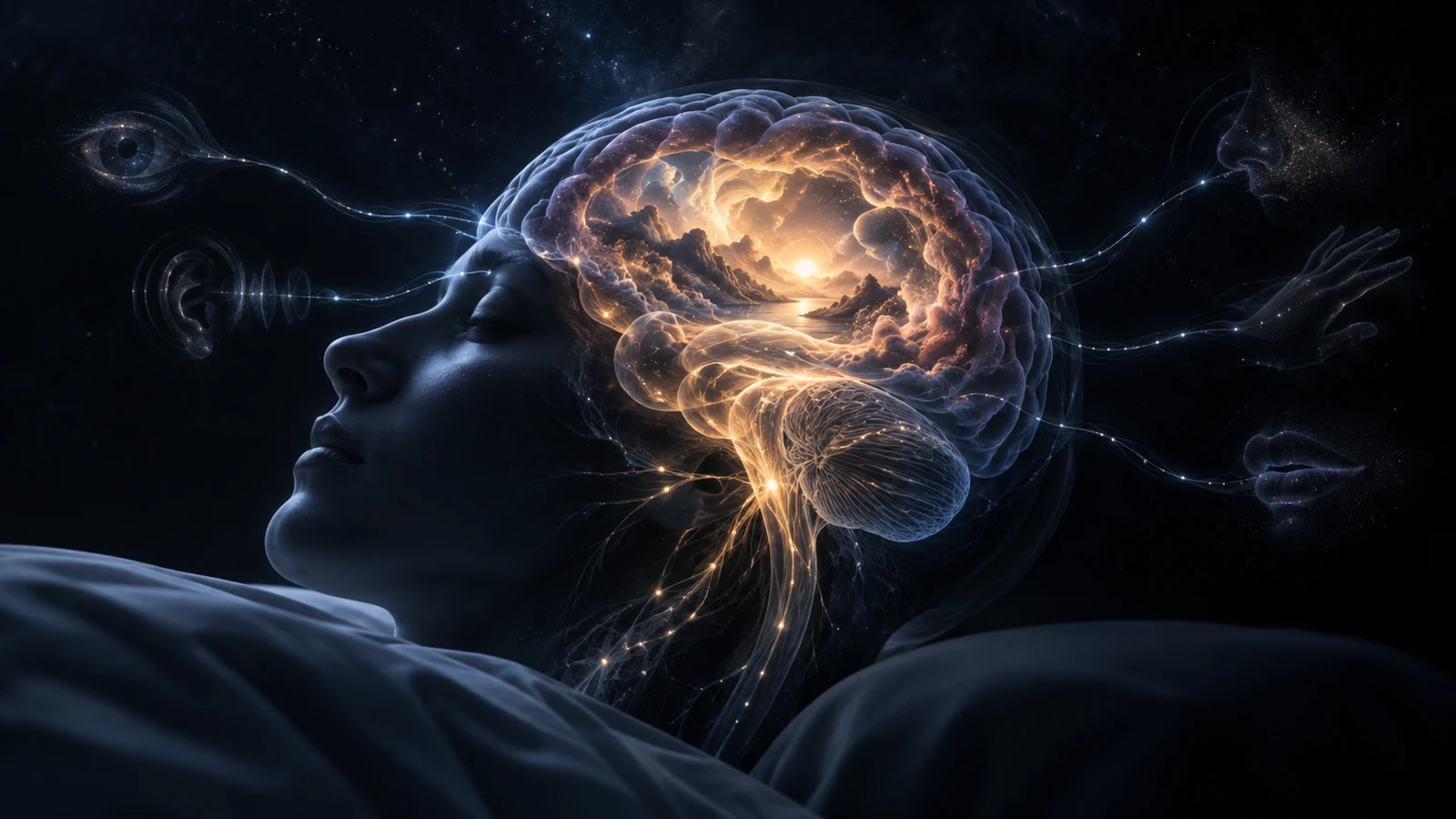
Three states often confused
A patient who does not move may be unconscious, conscious but disconnected from the environment, or later unable to remember an experience. Anaesthetic practice must act safely despite this distinction. Scientific studies therefore combine behaviour with brain dynamics, reports after recovery and carefully controlled stimulation.
Different drugs, different routes
Propofol, ketamine and volatile anaesthetics do not produce identical brain states. Ketamine can preserve vivid experience while reducing ordinary responsiveness. Propofol more often suppresses large-scale communication and complexity. These contrasts show why one behavioural endpoint cannot define consciousness across every drug and dose.
What brain complexity contributes
Measures such as perturbational complexity ask whether a stimulus evokes differentiated, integrated activity rather than a simple local response. They can help distinguish wakefulness, sleep, anaesthesia and severe brain injury at the group level. No single threshold is a universal private-experience detector, and muscle activity, noise and individual variation matter.
Dream reports and their limits
Reports after awakening show that disconnected experiences can occur during sleep and some anaesthetic states. Memory may fail even when experience occurred, so an empty report is ambiguous. Conversely, a later narrative can be reconstructed. Researchers need converging evidence rather than treating recollection as a perfect recording.
A practical scientific boundary
The strongest conclusion is conditional: certain network dynamics and complexity measures correlate with the capacity for experience, while responsiveness and recall can come apart. This improves monitoring and theory without revealing exactly what another person experienced at every moment.
Discussion question
Should medicine treat uncertain signs of disconnected consciousness as experience until evidence suggests otherwise?
Sources and further reading
Communications Biology — Ketamine and critical brain dynamics ↗Nature Human Behaviour — Individual connectivity under anaesthesia ↗Scientific Reports — Disconnected consciousness ↗Share your answer
You must log in to reply.
Sign Up / Log InEstablished evidence, active research and philosophical interpretation are clearly separated.