Published: 21 October 2026
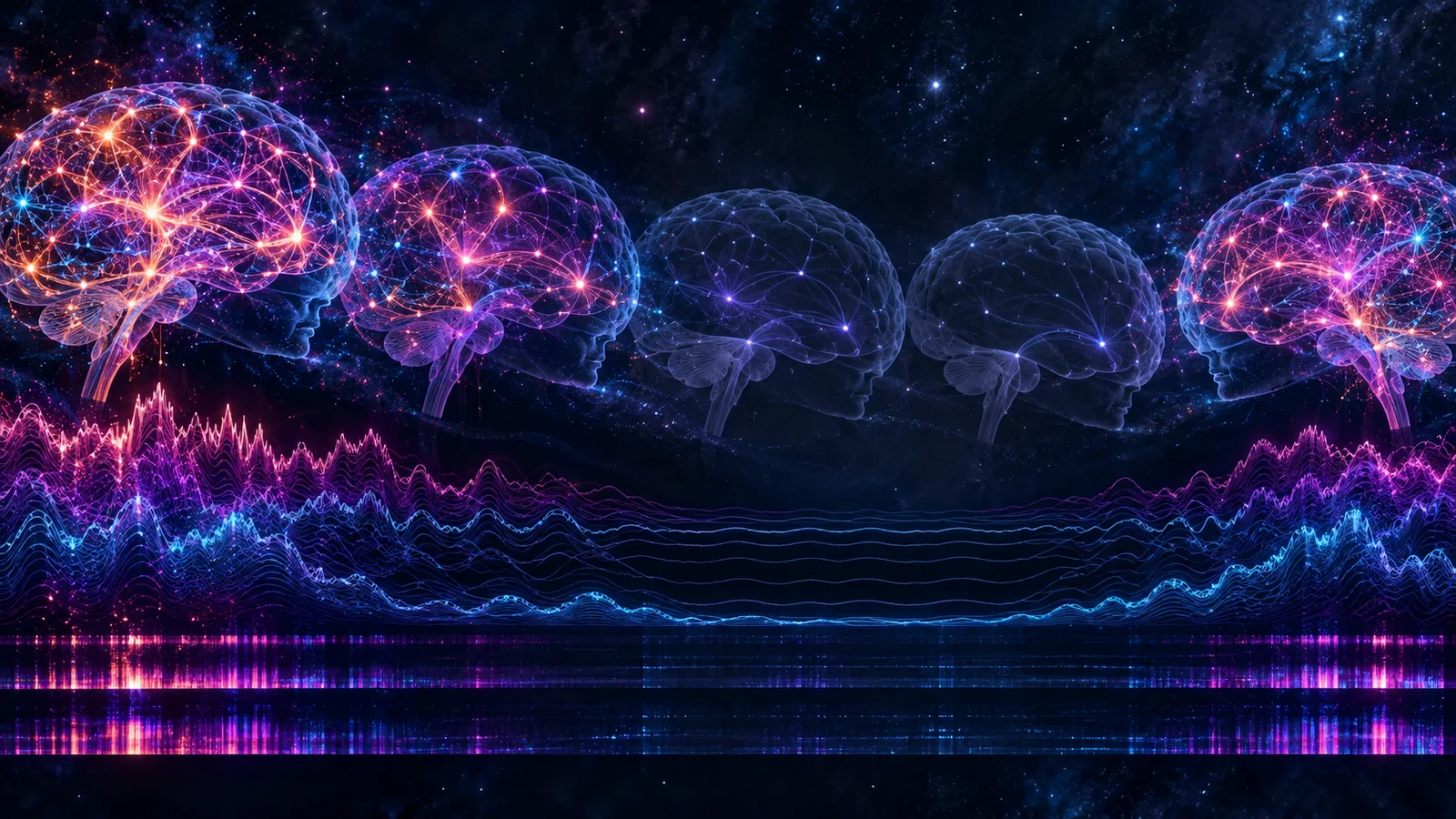
Silence can be ambiguous
A person who does not respond may be unconscious, unable to move or disconnected from the requested action. Anaesthesia research therefore looks beyond behaviour to the changing repertoire of brain activity.
Dynamics rather than one region
Conscious wakefulness is associated with flexible transitions among distributed networks. Under deep anaesthesia, activity can become more stereotyped, spatially constrained or tightly coupled to anatomical structure. These patterns are measurable over time.
What classifiers can do
Studies using resting-state fMRI and electrophysiology can distinguish anaesthetic levels from transient network states. The useful signal is often a combination of duration, recurrence and coordination rather than a single average activation.
The reverse inference problem
A pattern associated with unconsciousness in one drug or species may not generalise to dreaming, ketamine or brain injury. A classifier can recognise a state without proving why it occurs or whether experience is entirely absent.
Toward convergent monitoring
Stronger monitoring would combine spontaneous dynamics, perturbational responses, physiology and later reports. Agreement across methods could reduce error, especially when behaviour is unavailable, while uncertainty should remain explicit.
Discussion question
How much converging neural evidence should be required before concluding that an unresponsive patient has no conscious experience?
Sources and further reading
Transient brain activity dynamics discriminate levels of consciousness ↗The nature of consciousness in anaesthesia ↗Melloni et al. — Adversarial testing of consciousness theories ↗Share your answer
You must log in to reply.
Sign Up / Log InEstablished evidence, active research and philosophical interpretation are clearly separated.