Published: 20 October 2026
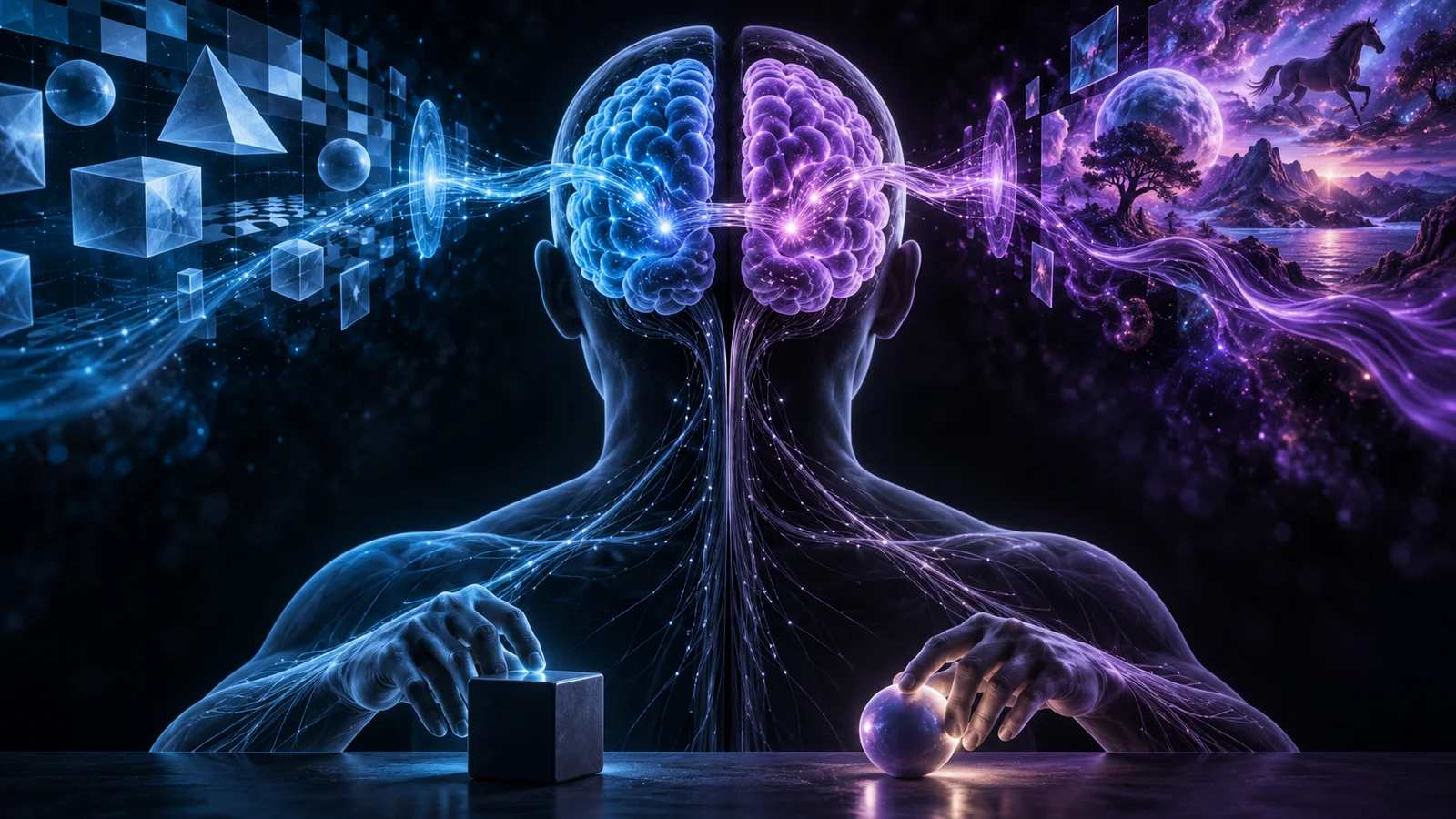
Why the corpus callosum was cut
In a small group of patients with severe epilepsy, surgeons severed major connections between the cerebral hemispheres to reduce seizure spread. Classic experiments presented information to one visual field or one hand, revealing that the hemispheres could process and respond to different information when communication was restricted.
The famous interpretation
Because the language-dominant hemisphere could report one stimulus while the other hand selected another, early accounts described two centres of awareness in one skull. The findings transformed neuroscience, but the popular image of two complete personalities exaggerates what the experiments established.
Unity can survive some divisions
Later studies found that some split-brain participants could respond accurately across the visual field even when direct comparison between hemispheres was impaired. Pinto and colleagues described divided perception with apparently undivided consciousness. Other researchers argue that task design, residual connections or response strategies complicate this interpretation.
Processing access is not subject count
A system can contain information that one response channel cannot access without creating a second subject. Conversely, behavioural coordination does not prove one unified experience. The hard question is which observations could distinguish divided access from divided phenomenology when subjective reports are themselves lateralized.
A lesson for theories
Split-brain cases force theories to specify what binds experiences: anatomical connection, causal integration, global access, embodied control or narrative report. No single experiment currently settles the metaphysical number of minds. The cases are most valuable as constraints on theories that would otherwise remain vague.
Discussion question
If two parts of a brain can act on different information but still coordinate daily life, what evidence would justify counting two conscious subjects rather than one?
Sources and further reading
Pinto et al. — Split brain: divided perception but undivided consciousness ↗Nature — A tale of split brains ↗Stanford Encyclopedia of Philosophy — The Unity of Consciousness ↗Share your answer
You must log in to reply.
Sign Up / Log InEstablished evidence, active research and philosophical interpretation are clearly separated.