Published: 6 November 2026
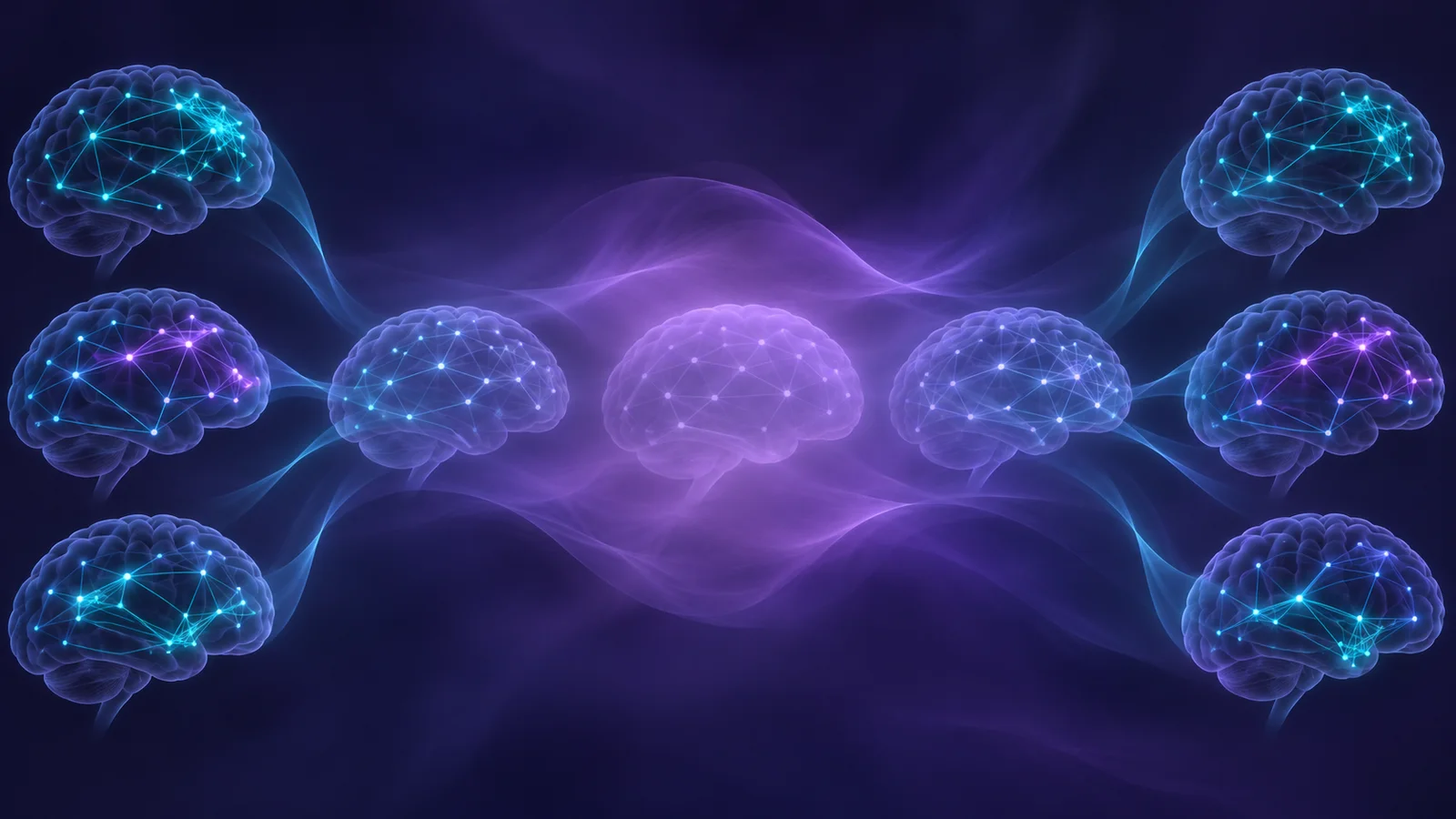
Every brain has a functional fingerprint
Patterns of synchronized activity across brain regions are stable enough to help distinguish one person from another. These functional-connectivity fingerprints are especially distinctive in association areas involved in complex cognition, rather than in primary sensory and motor regions alone.
Testing the fingerprint during unconsciousness
Researchers analyzed functional MRI acquired under the general anaesthetics sevoflurane and propofol. They asked whether a brain remained most similar to itself across scans and how distinct human connectivity remained from that of non-human primates.
Distinctiveness decreased
Deep anaesthesia reduced self-similarity and made individuals harder to identify from their connectivity patterns. The change was strongest in regions that normally vary most across people and have expanded most during human evolution. In that limited statistical sense, anaesthetized brains became more alike.
Recovery matters
The reduction was reversible when consciousness returned, even though anaesthetic could still be present in the bloodstream. That timing argues against a simple interpretation based only on drug concentration and supports a relationship between the conscious state and the organization of distinctive connectivity.
What the result does not say
A functional fingerprint is not a photograph of a self, and lower identifiability is not the same as an absence of all experience. Anaesthesia changes many physiological processes at once. The study shows a reproducible association; it does not prove that individual uniqueness generates consciousness.
A broader theory to test
Future work can compare sleep, coma, psychedelic states and different anaesthetics, while linking connectivity changes to carefully measured behavior and recovery. A useful theory should predict which aspects of individuality disappear, which remain and which return first.
Discussion question
If consciousness depends partly on what makes one brain dynamically unique, does losing that uniqueness mean losing the self—or only losing access to it?
Sources and further reading
Nature Human Behaviour — General anaesthesia decreases the uniqueness of brain functional connectivity across individuals and species ↗PubMed Central — open-access full text ↗Share your answer
You must log in to reply.
Sign Up / Log InEstablished evidence, active research and philosophical interpretation are clearly separated.