Published: 19 October 2026
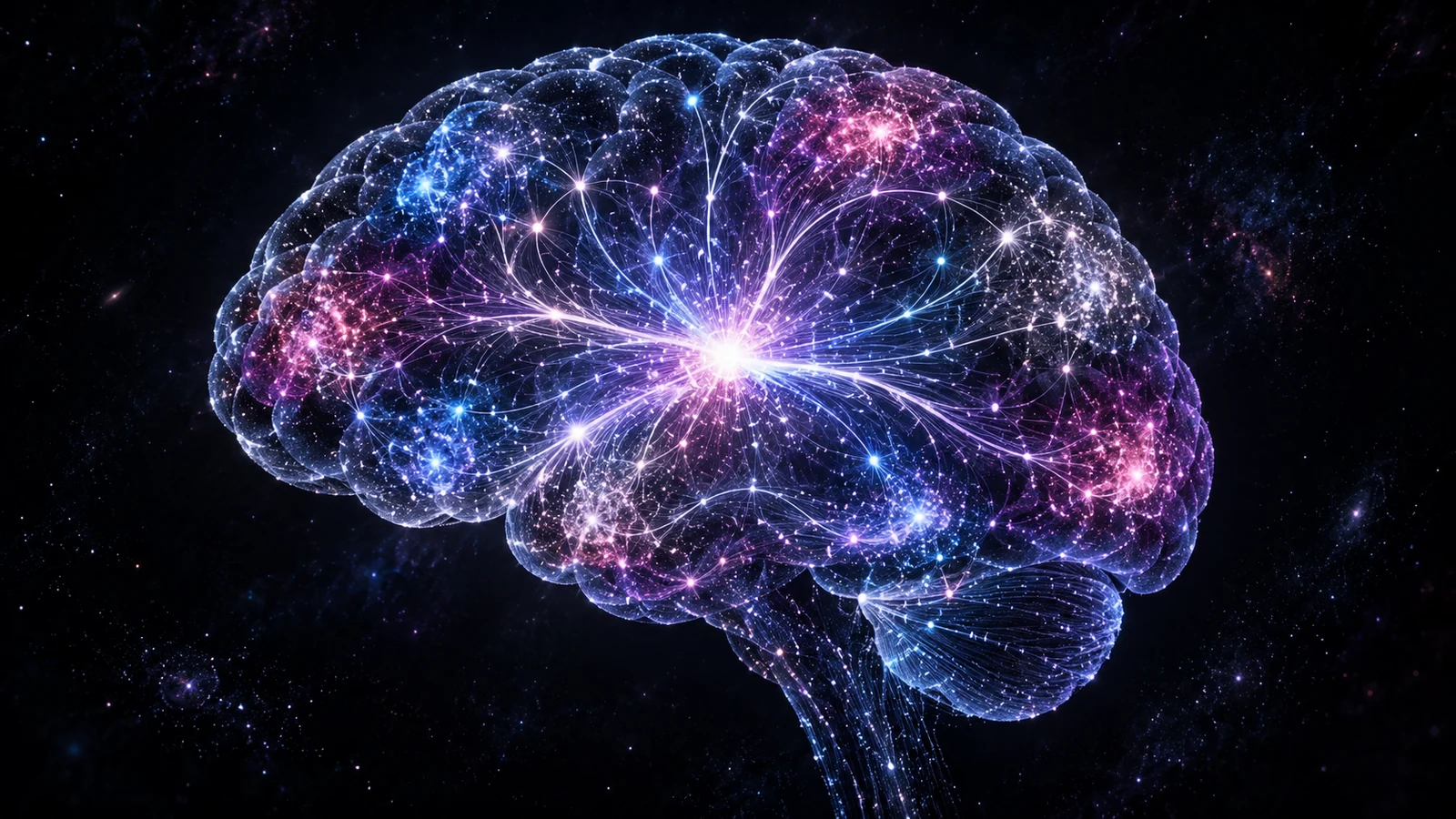
A theatre without a tiny observer
The global-workspace idea does not require a miniature person inside the brain. Many specialized processes operate in parallel and remain locally unavailable. A selected representation can enter a workspace and be broadcast, allowing memory, reasoning, verbal report and action systems to use the same content.
Predictions in neural terms
Versions of the theory predict late, widespread and recurrent activity when a stimulus becomes consciously accessible. Experiments compare seen and unseen stimuli, task relevance and reporting requirements. The difficult task is separating a genuine broadcast from attention, decision-making and the act of pressing a button.
Why adversarial tests matter
Different consciousness theories can explain the same result after the fact. A large adversarial collaboration preregistered contrasting predictions from global-neuronal-workspace and integrated-information approaches. The results challenged simple versions of both, showing that serious theory testing can produce informative disagreement rather than a winner by announcement.
Access may not equal experience
A workspace explains how information becomes usable across the system. Critics argue that access and report could occur after an experience has already formed, or that phenomenal character requires a different mechanism. Support for broadcasting is therefore not automatically proof that broadcasting constitutes consciousness.
From metaphor to mechanism
Progress requires precise measurements: which regions participate, how information is transformed, how quickly it spreads and what causal intervention blocks access. A theory earns confidence when risky predictions survive across laboratories and methods—not when a vivid metaphor fits every outcome.
Discussion question
If information guides memory and action but never enters a reportable global workspace, could it still be consciously experienced?
Sources and further reading
Mashour et al. — Conscious processing and global neuronal workspace ↗Melloni et al. — Adversarial collaboration ↗ConTraSt database ↗Share your answer
You must log in to reply.
Sign Up / Log InEstablished evidence, active research and philosophical interpretation are clearly separated.