Published: 8 November 2026
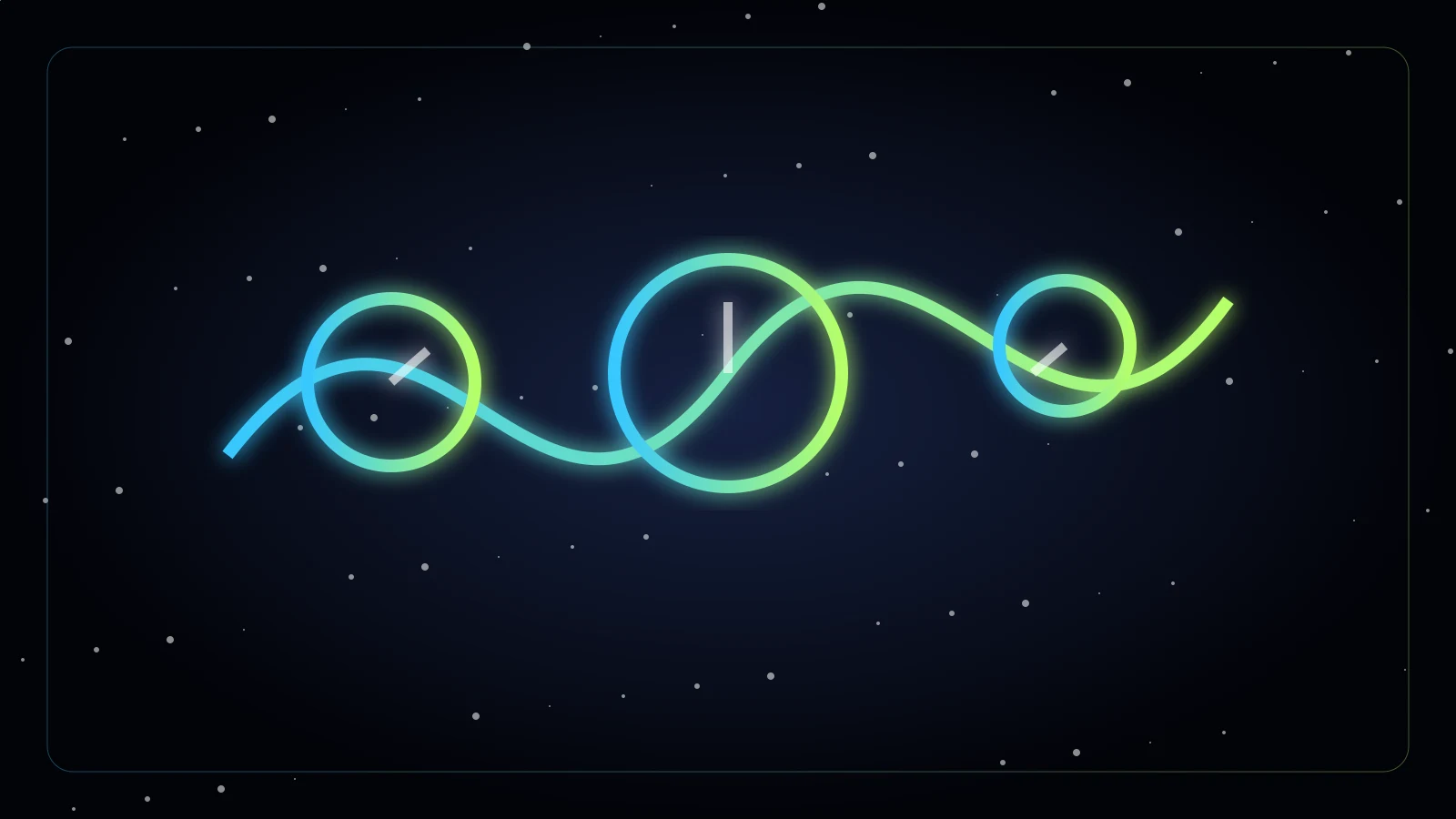
The present is not judged alone
When people reproduce a duration, the estimate depends partly on what came before. A long previous interval can pull the current judgment upward, while a short one can pull it downward. This sequential dependence makes perception stable, but also biased.
The average exerts another pull
Central tendency is a second effect: people tend to overestimate short intervals and underestimate long ones. In a noisy world, moving uncertain measurements toward the expected average is often a sensible Bayesian strategy.
EEG separates shared and individual signals
The study found that a frontocentral slow potential during the current stimulus depended on the previous duration. Activity in a right-parietal region was instead associated with how strongly sequential dependence differed between individuals.
The brain marks the expected ending
A response called the P2, triggered when the interval ended, was related to both central tendency and sequential dependence. A Bayesian model reproduced key neural dynamics, suggesting that the brain continuously combines incoming timing evidence with expectations.
No single inner clock
The findings fit a distributed inference process better than a perfect stopwatch. Attention, memory and learned statistics can all shape duration estimates. Physical time remains unchanged; the measurement made by the nervous system is what shifts.
Discussion question
If every present interval is biased by recent experience, can any subjective moment ever be judged independently?
Sources and further reading
Journal of Neurophysiology / PubMed — Neural correlates of perceptual biases in duration perception ↗DOI — Neural correlates of perceptual biases in duration perception ↗Share your answer
You must log in to reply.
Sign Up / Log InEstablished evidence, active research and philosophical interpretation are clearly separated.