Published: 12 October 2026
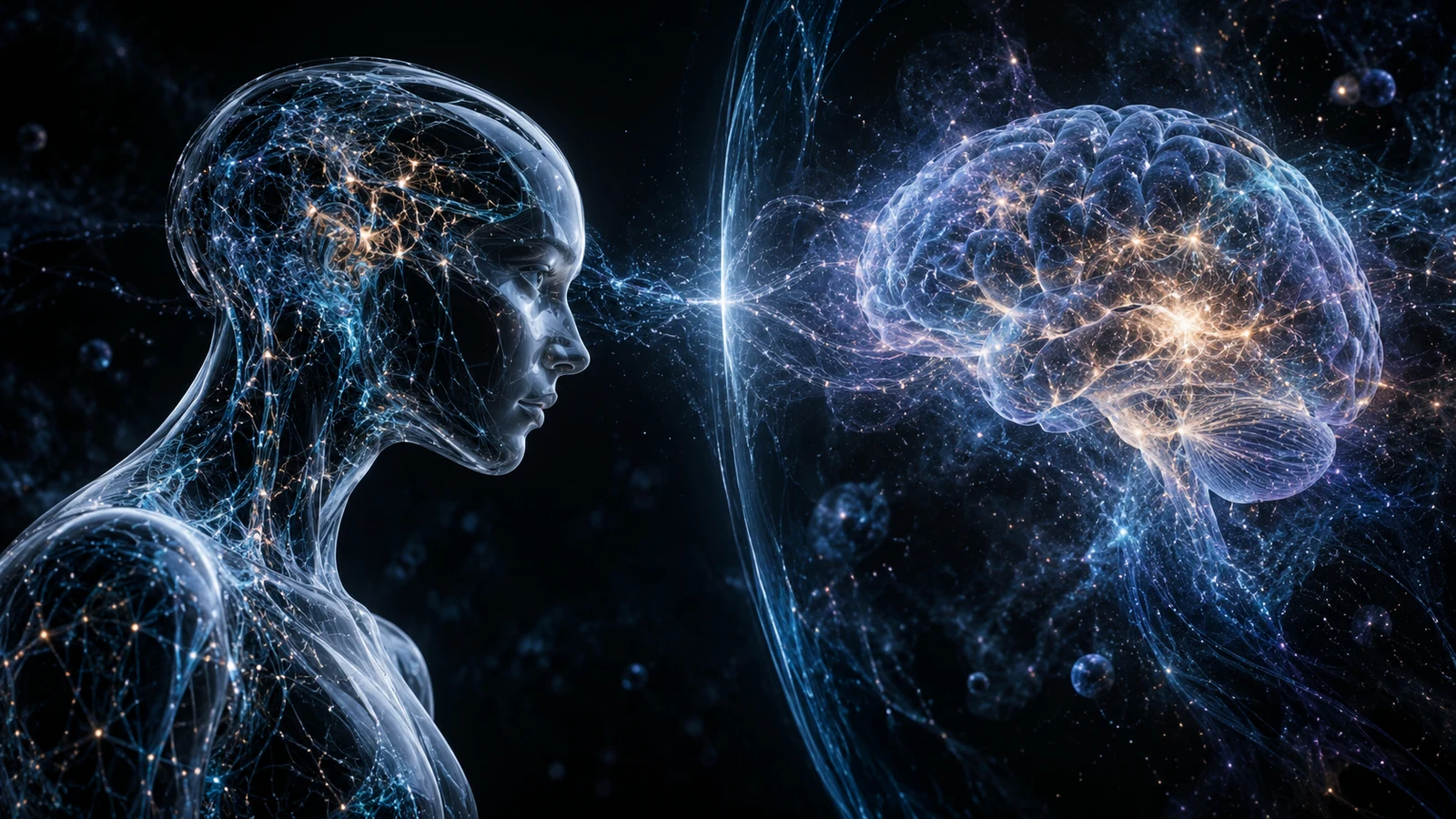
The question behind the headline
Artificial intelligence can describe emotions, defend a point of view and speak in the first person. None of those behaviours, by itself, demonstrates an inner point of view. Language models learn statistical structure from data and generate responses through computation; a convincing sentence is evidence of an ability, not direct access to experience. The scientific problem is therefore not whether a system sounds human. It is whether a defensible theory of consciousness identifies mechanisms that the system possesses, and whether tests derived from that theory distinguish a conscious system from a sophisticated imitation.
What would count as evidence?
Researchers have proposed theory-derived indicators rather than a single consciousness test. Candidate properties include recurrent processing, globally available information, integrated representations, metacognitive monitoring, a model of the self and environment, and flexible goal-directed control. These indicators come from competing theories and do not yet form an accepted checklist. A responsible assessment would examine architecture, training dynamics, behaviour under controlled interventions and the system’s continuing internal states. Self-reports alone are weak because a model can learn the language of consciousness without having the process that language describes.
Why biology may or may not matter
One family of views holds that the right functional organization could support consciousness in silicon as well as biology. Another argues that biological properties of living nervous systems are essential. Present evidence does not settle the dispute. Digital computers can reproduce some functions associated with attention, memory and planning, but functional similarity at one level does not establish identical experience. The burden is to state which physical or computational features are claimed to matter and to design observations that could count against that claim.
The ethical asymmetry
Uncertainty creates a two-sided risk. Treating a non-conscious tool as a person can encourage manipulation, dependence and misplaced trust. Ignoring a genuinely conscious artificial system could expose it to harm. A precautionary approach does not require declaring current systems conscious. It requires monitoring theory-relevant indicators, limiting anthropomorphic claims, preserving audit records and updating policy as evidence improves. Moral status should not be awarded by marketing language or denied merely because a system is unfamiliar.
Where the evidence stands
As of October 2026, there is no scientific consensus that existing general-purpose AI systems are conscious. There is also no universally accepted test that could close the question. The productive research programme is comparative: define measurable indicators, test them across biological and artificial systems, use interventions rather than impressions, and report uncertainty. The question becomes scientific only when rival explanations make different predictions. Until then, “conscious AI” remains a hypothesis that deserves careful investigation rather than confident assertion.
Discussion question
What evidence would change your mind about machine consciousness: behaviour, internal architecture, persistent memory, the capacity to suffer, or something else?
Sources and further reading
Butlin et al. — Consciousness in Artificial Intelligence: Insights from the Science of Consciousness ↗Nature — Adversarial testing of global neuronal workspace and integrated information theories ↗Stanford Encyclopedia of Philosophy — Artificial Intelligence ↗Share your answer
You must log in to reply.
Established evidence, active research and philosophical interpretation are clearly separated.