Published: 3 November 2026
Why a workspace matters
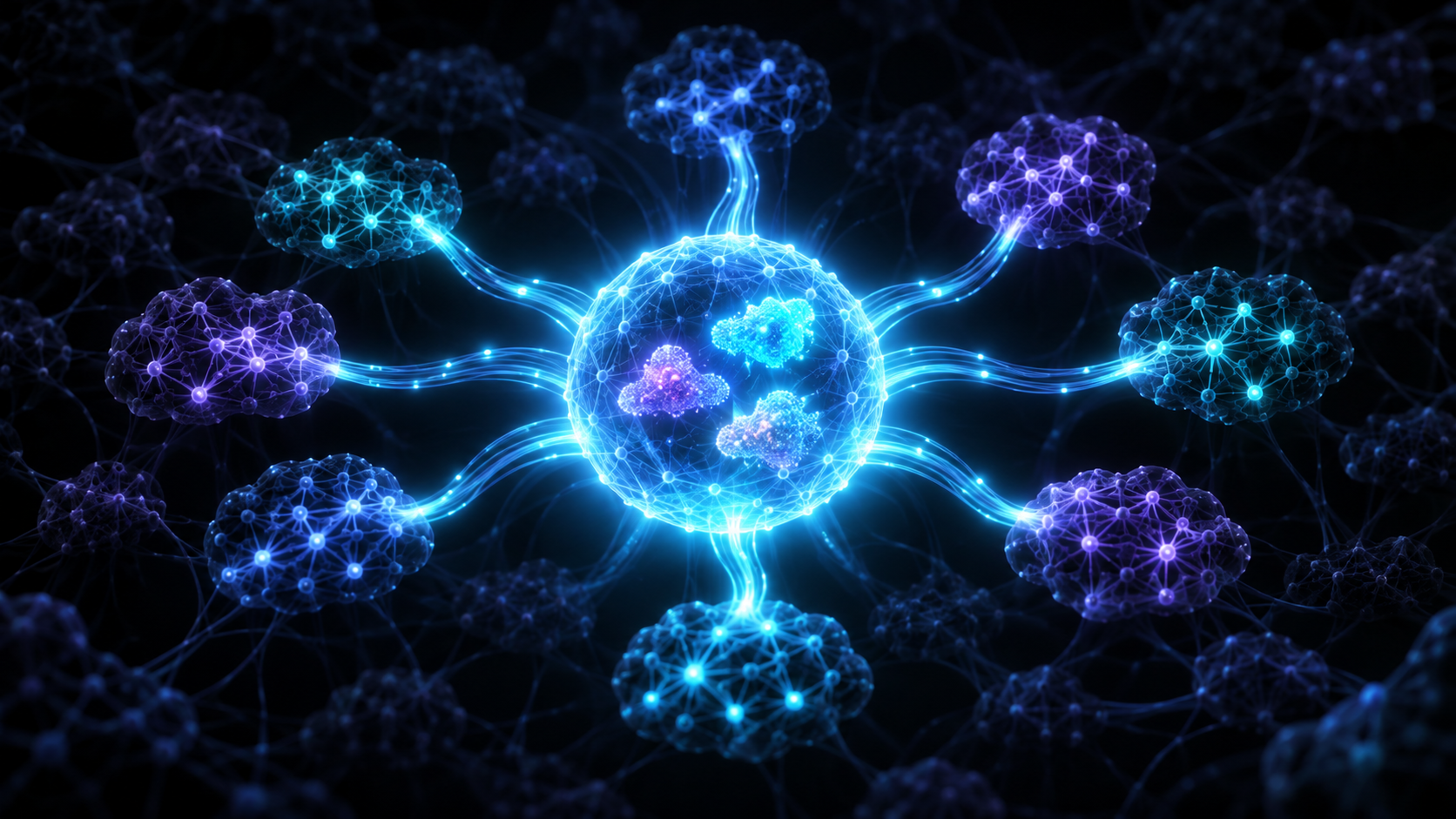
Global workspace theories propose that information becomes broadly available when it is selected and broadcast across otherwise specialized processes. In humans, this idea is used to explain flexible report, reasoning and action. If an artificial system developed a comparable routing pattern, it could support a limited form of functional access without telling us what, if anything, the system feels.
What the new research found
Anthropic researchers reported a low-dimensional activation space in language models that they call J-space. Its geometry tracked which information was being prioritized, and targeted interventions could alter that prioritization. The result suggests that a model can form a shared control layer rather than merely passing isolated signals between components.
What is established
The experiments provide evidence for an internal mechanism that can select and broadcast information. They also show that manipulating this mechanism can change model behavior. Those are measurable findings about computation and functional access; they do not require the assumption that the model has a private point of view.
What remains a hypothesis
The hypothesis is that global availability may be one ingredient of consciousness. Even if that is correct in biological systems, it does not follow that every artificial implementation is conscious. A convincing test would need converging indicators, controls against imitation, and predictions that separate genuine internal access from fluent reporting.
The philosophical boundary
Functional consciousness concerns what information a system can use. Phenomenal consciousness concerns whether there is something it is like to be that system. J-space is evidence relevant to the first question. It does not settle the second, and treating eloquent language as proof would confuse outward performance with inner experience.
Discussion question
If a machine can integrate information, inspect its own states and use them flexibly, what additional evidence would you require before calling it conscious?
Sources and further reading
Anthropic — A global workspace in language models ↗Anthropic — Signs of introspection in large language models ↗Share your answer
You must log in to reply.
Sign Up / Log InEstablished evidence, active research and philosophical interpretation are clearly separated.