Kuantum
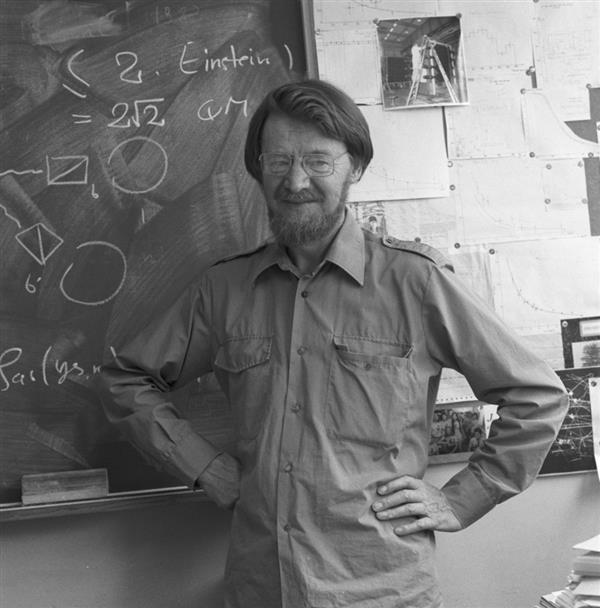
John Stewart Bell
1928–1990 · theoretical physicist
Can an argument about reality be tested by experiment?
With his 1964 theorem he transformed the difference between quantum correlations and local explanations into measurable inequalities.
Contribution: From the EPR question to an inequality
Einstein, Podolsky and Rosen's questions regarding the completeness of quantum theory were at the center of interpretation discussions for a long time. Bell's 1964 paper limited what correlations latent variable models could produce under certain assumptions of locality and independence of measurement choices. Quantum theory can predict correlations that do not comply with these limits. Thus the discussion of abstract reality turned into a mathematical problem that could be compared with appropriate experiments.
Importance of subsequent experiments
Bell's theorem is a mathematical result; Experiments showing violations of inequalities are based on the work of different researchers. This distinction prevents us from confusing intellectual contribution with observational verification. The layout of experiments, detector efficiency, measurement choices, and the relationship of events in space-time are important in interpreting the results. The 2022 Nobel Prize in Physics recognized the contributions of Clauser, Aspect and Zeilinger, who developed this experimental field with entangled photons.
What doesn't it prove?
Violations of Bell's inequality do not imply faster-than-light messaging or thought transmission. Entanglement produces correlations; It is not possible for a party to choose its own measurement result according to the message it wants. Usual communication is required to compare results. The theorem also does not indiscriminately rule out all hidden variable explanations; It is valuable because it limits which assumptions can be maintained together.
Works, articles and further reading
We do not copy full texts; We direct you from our original explanations to the relevant work or publication record. Full text access may be limited in some publications.
On the Einstein Podolsky Rosen Paradox · 1964 ↗Primary scientific article2022 Nobel Prize in Physics: entanglement experiments ↗Official experimental contribution summaryBu izi takip et
Read this person's contribution along with the relevant topic files; Compare our site's description with the primary work.