Why doesn't time flow at the same pace for everyone? From atomic clocks to GPS
Established physics · Measured effects · Research objectives separately stated
File: 3 October 2026 · 2022 and 2024 clock experiments; 2025 ACES installation announcement
First the right question: Which two watches are we comparing?
The phrase “time slows down” is an incomplete beginning. A clock works regularly wherever it is; the person standing next to him does not feel his own pulse or seconds become strange. The difference becomes apparent when the history of two watches is compared. It is important which paths the clocks follow, how fast they move, and what gravitational conditions they exist in. Relativity helps make these comparisons quantitatively. One person's time may accumulate differently compared to another's time; We don't have to explain this by a change in perception or device malfunction. Distinguishing the colloquial “flow of time” from the comparison of physical clocks is the first step to understanding the subject.
Self-time: The time accumulated along a path
Self-time is the time a watch records along its own path. Two synced watches at a meeting may show different times when separated and put back together. Here it is not enough to just know the starting and ending point; The path in between is also required. Picture this with a thought experiment: two travelers leaving the same place return to the same place via different routes. Calculating time difference in physics is not the same as calculating path length on a map, but the idea that route matters is useful. This analogy is not a measurement result, but our means of explaining the concept. In detailed calculation, the geometry of space-time and motion are used together.
The effect of speed and the effect of gravity are different
In special relativity, there is a time dilation for a clock that moves according to the selected inertial reference frame. In general relativity, the gravitational potentials of clocks are also compared. A clock that stands higher near the world moves faster than the lower clock in proper comparison. This does not mean that all clocks in space are necessarily faster; orbital velocity can contribute in the opposite direction. In a real system, it is necessary to calculate the two effects together. Nasa's GPS narrative also emphasizes gravitational frequency shift. NASA: relativity and GPS
Why is there relativity in phone location?
According to NIST, the speed of the clocks in the GPS orbit contributes to a retardation of about 7 microseconds per day compared to the clocks on Earth due to the effect of special relativity. The gravitational difference, on the other hand, contributes in the direction of moving forward about 45 microseconds. The net difference is about 38 microseconds. This seemingly small difference cannot be ignored in positioning that requires precise timing. These are approximations of standard GPS conditions; they are not universal numbers for all orbits. The same NIST source explains that aircraft, satellite, and altitude comparisons test relativity. NIST: hours and relativity tests
Millimeter scale experiment
In 2022, JILA researchers measured frequency variation due to height difference on a millimeter scale in a sample of strontium atoms. NIST's February 16, 2022 announcement introduces this conclusion and the Nature paper. This is not a major difference in aging that one can notice with one's daily senses; it is a very precise measurement result. The significance of the experiment is that it shows that the effects of relativity are not unique to stars or large orbits. NIST's later description also describes the study, which progressed to a submillimeter scale in 2024. We give these results not as new discoveries that have taken place today, but as stages of the near-term research line. 2022 deney duyurusu
Atomic clock is not about counting atoms
An atomic clock uses an appropriate atomic transition as a frequency reference. Optical clocks can use different transitions and techniques. To understand the precision of the clock, we look not only at a beautiful device photo, but also at frequency stability and systematic uncertainties. It is important to control factors such as temperature, movement, electromagnetic environment and measurement setup. NIST's examples show that better clocks can test the relationship between gravity and time at smaller differences. It does not follow from this that "quantum physics and relativity have been combined"; It can be said that the questions where these theories intersect can be approached with more sensitive tools.
ACES: Comparing clocks in space with Earth
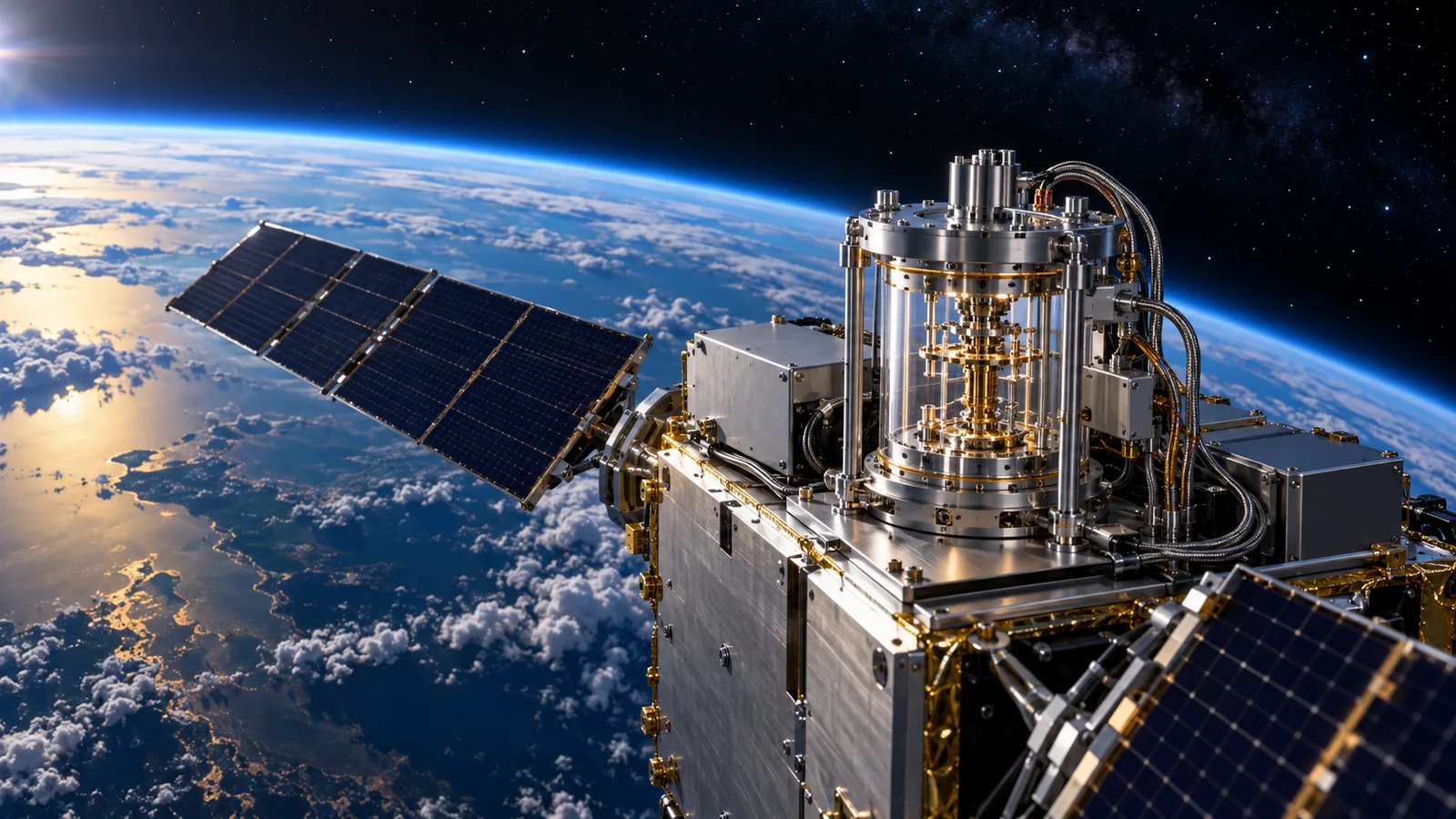
ACES has been deployed on the International Space Station, according to ESA's 2025 announcement. The setup includes time transfer connections with clocks named PHARAO and SHM. One goal is to test fundamental physics by comparing space and ground hours. News of the installation does not mean that all the expected results from the task have been achieved. In this file, we specifically distinguish between the completed installation and the research objective. The scientific power of a watch experiment does not only make two watches very well, but makes the comparison between them sufficiently reliable. ESA: ACES’in kurulum duyurusu
Is there a contradiction in the twin paradox?
In the thought experiment where a twin travels and returns, the age difference at the time of meeting can be compared. Not all movement histories of two people are the same; Therefore, the objection "each sees the other as moving, so the result is contradictory" remains incomplete. The departure, return and reference frame changes of the travel scenario must be taken into account. It would also be misleading to describe the age difference as merely the mysterious effect of a moment of acceleration; self-time accumulates along the paths. This issue is not evidence for returning to the past. Less aging due to relativity can be interpreted in everyday language as moving forward a different amount into the future; Sending messages to the past is a separate claim.
Thinking exercise: Complete your claim
Without immediately accepting the sentence “time is slower in space”, ask for three pieces of information: which orbit, which speed, and which comparison with the ground clock? Then "Is it because the clock is broken or is it a difference predicted by the theory?" Add the question. Good description describes the comparison and states the measurable result. Next time you hear about relativity, try rewriting the headline with these questions. For example, the statement “These two clocks recorded different times under these conditions and with this uncertainty” is more informative than the sentence “the mystery of time has been solved”. You can share your own example or the distinction you are having trouble understanding in the response area below.
Kaynaklar
NIST — Putting Einstein to the Test (2025)