Current analysis · Robotics and workforce · September 30, 2026
How much of human work can robots really do?
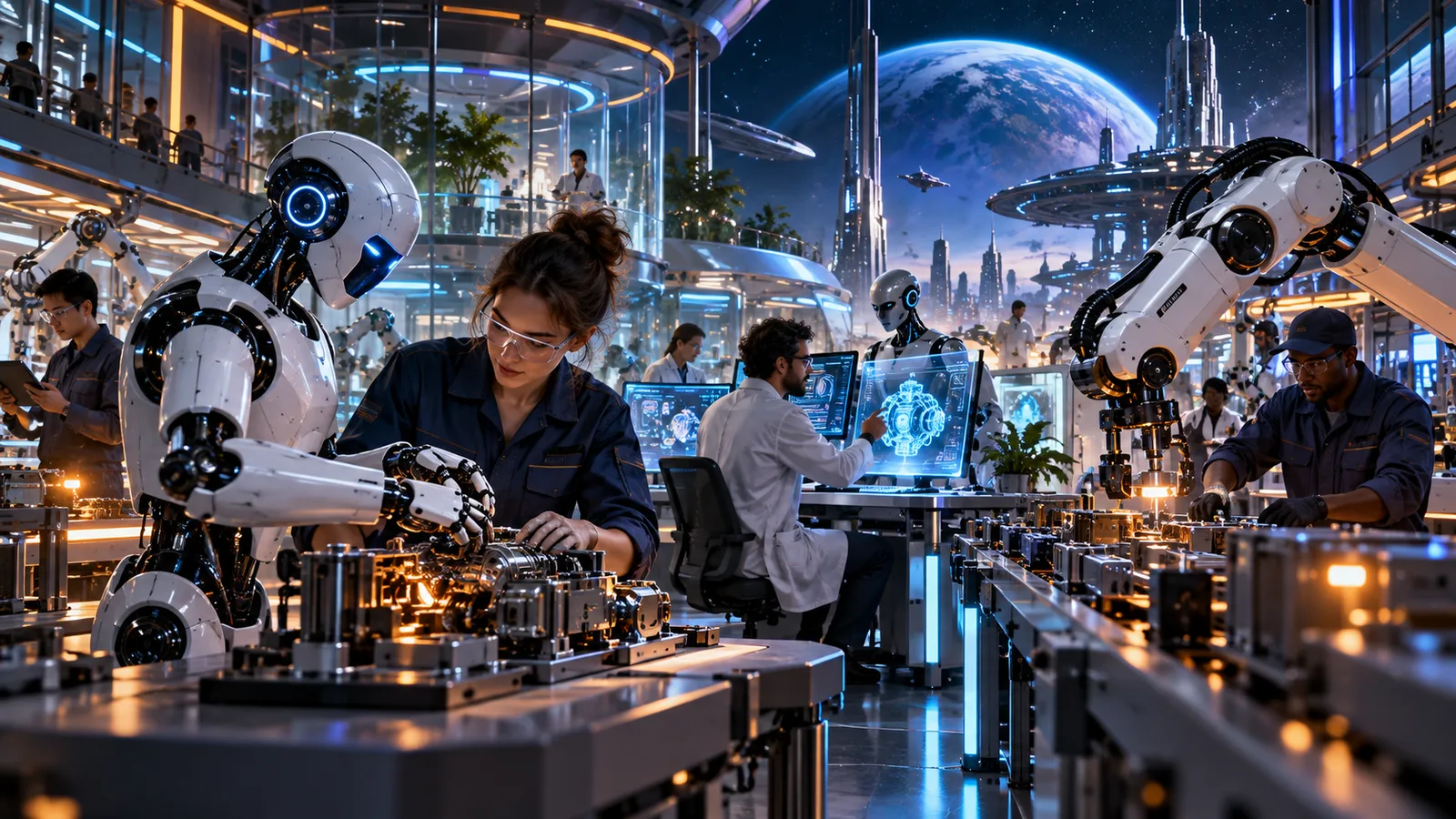
The argument that robots will “take our jobs” often boils down to a single percentage. The new study published by Anthropic researchers suggests a more careful distinction: Just because a robot can perform a specific physical task in a controlled environment does not mean that task can be safely, cheaply and seamlessly automated in every workplace. To measure this difference, the research constructs a robot exposure index that matches today's robot capabilities with the actual tasks of occupations.
Basic framework
Current robots tap a talent base that could technically perform nearly three-quarters of physical tasks in the United States, the study estimates; these tasks account for approximately 34 percent of total working hours. When language models are taken into account, approximately 80 percent of tasks by run time appear to be exposed to at least one type of artificial intelligence or robotic technology. But “exposure” does not mean that a profession will disappear: some tasks may transform, some may shift to human-machine collaboration, and some may remain with humans for a long time due to cost.
crux of the debate
Jobs that are repetitive, measurable, and whose environment can be organized, such as driving and warehouse operations, show higher technical exposure. Jobs that require a variable environment, fine motor skills, empathy, responsibility and coping with unexpected situations, such as nursing, general maintenance and repair, are areas where today's robots are more limited. Success in the physical world is not just a clever model; It should not be forgotten that it requires sensors, durable hardware, energy, safety, maintenance and legal responsibility.
Today's knowledge frontier
Therefore, the most realistic image of the near future is not "one robot doing all the work", but the resharing of certain tasks within the jobs. Companies should independently test efficiency claims under actual working conditions; Employees should participate in system design and openly discuss how the efficiencies gained through new technology will be shared. The research is based on US job data and is not necessarily representative of the global workforce. The results are not a prediction of the future, but a current snapshot of where today's technology is powerful and where it is expensive or fragile.
What do models actually learn?
Modern models encode statistical relationships between training samples into high-dimensional numerical representations. A language model calculates the probabilities of subsequent parts based on context. This mechanism can produce impressive generalization; but it does not mean that the world has a verified database.
The difference between talent and reliability
A model may seem strong at math, code, or visual analysis but make mistakes on a simple task. Because of this uneven capability limit, a single benchmark score does not indicate actual safety of use. Field testing, failure analysis, human supervision, and an appropriate fallback path in case of failure should be designed together.
How should we read social impact?
AI can provide efficiency and accessibility; it also affects business processes, copyright disputes, energy use, information ecosystem and power distribution. These effects are not determined by technology alone: institutions, regulation, education, and the critical literacy of users change the outcome.
2026 outlook
The Stanford AI Index 2026 reports that enterprise AI adoption has reached 88 percent, with generative AI reaching nearly 53 percent population-level adoption in three years. The same report highlights that security assessment and independent verification have not kept pace with the increase in capability.
Risk and regulation
NIST's generative AI profile highlights governance, content lineage, pre-use testing, and incident notification to manage risks throughout the lifecycle. The EU Artificial Intelligence Law deals with prohibited, high-risk and general-purpose systems with different obligations.
Featured reviews
Alan Turing — raised the question of machine intelligence with a behavioral testing and computational framework.
Fei-Fei Li — developed visual AI, human-centered approach, and the role of datasets.
Geoffrey Hinton, Yoshua Bengio, and Yann LeCun — pioneered the development of fundamental methods of deep learning.