Research program · Not a settled theory
Can the universe be calculated?
Digital physics investigates whether the concepts of information and computation can be constitutive of fundamental physics.
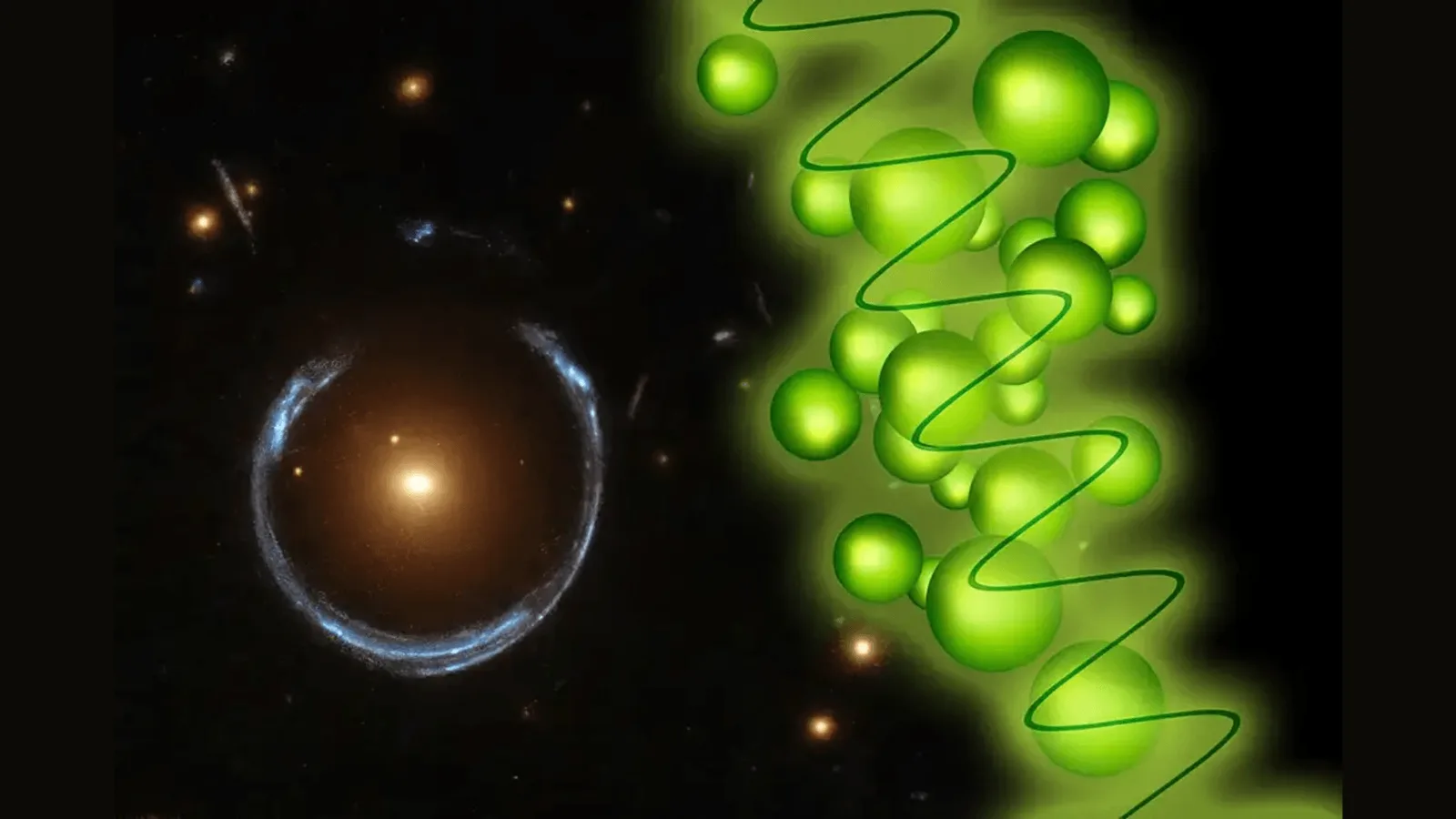
Basic framework
Entropy, quantum measurement, and black hole physics show that information has physical significance.
crux of the debate
The Planck scale does not prove that space is strictly composed of pixels.
Today's knowledge frontier
Describing the universe with information does not mean that there is a computer out there running it.
Structure of the simulation argument
The simulation hypothesis works from the assumption that technologically advanced civilizations can run large numbers of past simulations involving conscious beings. Nick Bostrom's argument does not directly prove the conclusion that "we are in a simulation"; It is conditional reasoning that argues that at least one of three possibilities must be true. The outcome therefore depends on strong assumptions that the survival of civilizations is possible, that simulation of consciousness is possible, and that such simulations are actually preferable.
Bilimsel test sorunu
For a claim to gain scientific value, it must not only be interesting but also specify the conditions under which it can be falsified. The fact that the universe has discrete scales, a speed limit, or mathematical order is not evidence of computer simulation alone; these can be explained by independent physical theories. If the simulator can manipulate each observation at will, the hypothesis does not produce distinctive predictions and escapes experimental testing.
philosophical value
A hypothesis is nevertheless a powerful thought experiment to test the concepts of truth, experience, consciousness, and knowledge. Whether objects in a virtual world are real to the inhabitants of that world; Whether moral responsibility persists in simulation and whether a consciousness can be reproduced computationally are important philosophical questions. Just because these questions are open does not mean that the hypothesis has been physically proven.
Difference between argument and evidence
Just because a thought experiment is consistent does not mean it is physically true. The simulation argument includes assumptions about the calculus of probability, the future of civilizations, and the calculability of consciousness. When one of these assumptions changes, the result may also change.
Testability criterion
A scientific version must produce a measurable prediction that is distinct from competing physics models. Pixel-like space, speed limit, or mathematical order alone are not proof. A claim that explains every possible observation by saying "the program was written like this" cannot be falsified and ceases to be a physical theory.
Featured reviews
Nick Bostrom — set up the simulation argument as a probabilistic philosophy problem.
David Chalmers — discussed the reality status of experience in virtual reality.
Source: Stanford Encyclopedia of Philosophy